Why Your Skin Isn’t Healing: The Oxidative Stress Connection
If you’ve been dealing with ongoing skin issues like eczema, acne, or chronic inflammation, chances are that you’ve already explored many of the usual approaches, such as changes in your diet, targeted supplements or high-quality skincare or even have worked on your gut health as you understand the link between skin health and the gut microbiome.
And yet, the results are inconsistent — or simply not lasting, leading to an important question:
What if the issue isn’t what you’re doing, but what’s still missing?
One increasingly recognised piece of the puzzle is oxidative stress — a fundamental process that can quietly interfere with your body’s ability to heal.
Understanding Oxidative Stress — Beyond the Basics
At its core, oxidative stress refers to an imbalance between reactive molecules (free radicals) and your body’s ability to neutralize them with antioxidants.
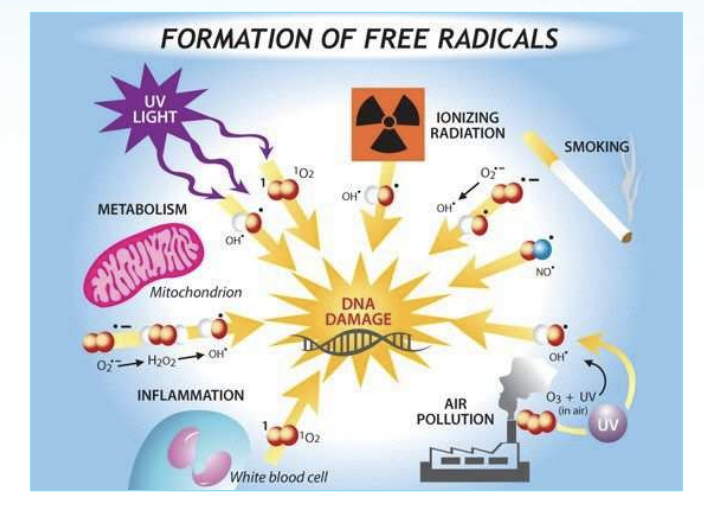
Free radical damage occurs in our bodies as part of a normal biological process, when the body produces energy (mitochondrial activity), digestes food, or through immune responses and detoxification processes.
Free radicals are usually destroyed by our body’s natural antioxidant system. However, modern life increases the burden through environmental toxins, UV exposure, psychological stress and chronic inflammation.
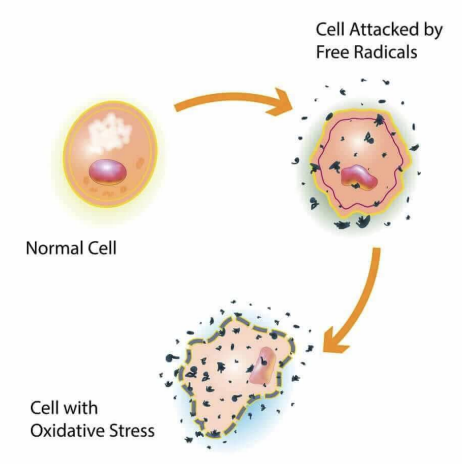
When the system becomes overwhelmed, these reactive molecules begin to:
Damage cellular structures
Disrupt signaling pathways
Prolong inflammatory responses
Why This Matters for Skin Health
Your skin is not only a protective barrier — it’s also a highly active metabolic organ.
For skin to heal effectively, your body needs to repair damaged tissue, regulate immune responses and maintain balanced inflammation.
Excessive oxidative stress can interfere with all three.
This can show up in many different ways:
Persistent or recurring inflammation
Delayed healing of lesions or flare-ups
Increased sensitivity and reactivity
A tendency for conditions to relapse
In other words, even if you’re doing many things “right,” your system may still be operating under biochemical stress that limits repair.
The Overlooked Limitation of Conventional Approaches
Many functional and integrative strategies already address important root causes such as gut health, nutrient deficiencies, hormonal balance and external triggers.
However, oxidative stress is often indirectly addressed, rather than targeted.
This creates a subtle but important gap, because even when upstream factors are improved, the body still needs sufficient capacity to neutralise ongoing oxidative damage and restore balance at the cellular level for profound capacity of regeneration.
This is where therapeutic approaches like Brown’s Gaz can play a major role.
Are Antioxidants Enough?
A common recommendation is to increase antioxidant intake through diet (fruits, vegetables, polyphenols) or supplements (vitamins C, E, glutathione support, etc.). Antioxidants neutralise free radicals by giving up some of their own electrons, which are lacking in free radicals and thus, damage other molecules.
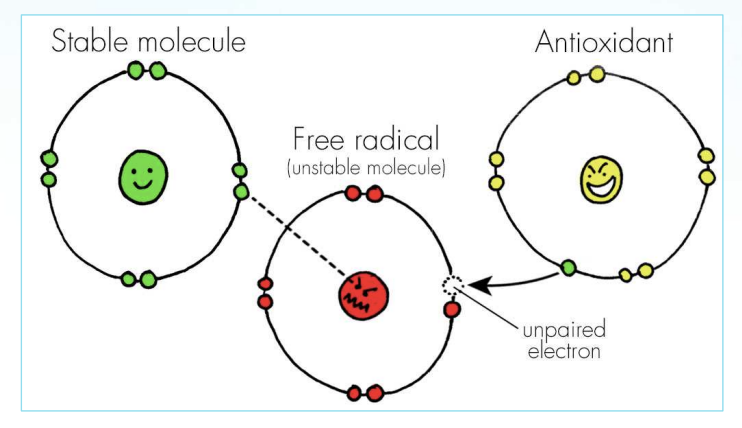
These are valuable and often necessary, however, in practice, they don’t always fully resolve the issue.
Because firstly, antioxidants can be limited in their distribution and absorption, secondly, some act non-selectively, affecting both beneficial and harmful reactive species and lastly, the overall oxidative burden may simply exceed what these strategies can handle.
This is why some individuals continue to experience symptoms despite doing “everything right.”
A Shift Toward Cellular-Level Support
In recent years, there has been growing interest in approaches that support the body’s ability to regulate oxidative stress more efficiently — not just by adding antioxidants, but by modulating the system itself.
This includes exploring molecules and therapies that:
Act selectively on the most harmful reactive species
Help restore redox balance (the body’s internal equilibrium)
Support mitochondrial and cellular function
While this field is still evolving, it reflects an important shift to support the body’s capacity to respond and recover rather than simply adding inputs.
What This Means for Your Healing Process
If your skin has not responded fully to conventional or functional approaches, it may not be due to a lack of effort or discipline.
Instead, it may indicate that:
Oxidative stress remains elevated
Cellular repair mechanisms are under strain
The system lacks the conditions needed for full recovery
Addressing this layer can often enhance the effectiveness of everything else you’re already doing.
Bringing It All Together
Skin healing is a complex, multi-layered process.
Nutrition, gut health, and lifestyle all play essential roles — but they are part of a larger system that ultimately depends on cellular balance and resilience.
Oxidative stress sits at the intersection of these processes and for many people, it represents the missing link between effort and results and short-term improvements and long-term healing.
A Final Thought
As our understanding of chronic inflammation evolves, so does the way we approach healing.
There is increasing recognition that supporting the body at a deeper, cellular level may be key — especially in cases where conventional strategies have reached their limits.
Some emerging approaches are beginning to explore exactly this, using targeted methods to help the body regulate oxidative stress more effectively.
Want to Explore This Further?
If you’re interested in a more advanced, root-cause approach to skin healing — one that includes support at the cellular level — you can join the waitlist.
