How to Reduce Skin Inflammation Naturally
For many people, the process of trying to reduce skin inflammation naturally follows a familiar path: improving diet, removing trigger foods, supporting gut health, and simplifying skincare.
These interventions are often necessary — and in some cases, they lead to initial improvement.
But for a significant number of individuals, progress eventually plateaus. Symptoms return, flare-ups become less predictable, and the skin remains persistently reactive despite continued effort.
At this stage, the question shifts from “What should I change next?” to something more fundamental:
Why is my body not resolving inflammation effectively?
When Inflammation Becomes Chronic
Inflammation is a tightly regulated biological process designed to protect and repair the body. Under normal conditions, it follows a defined sequence: activation, response, and resolution.
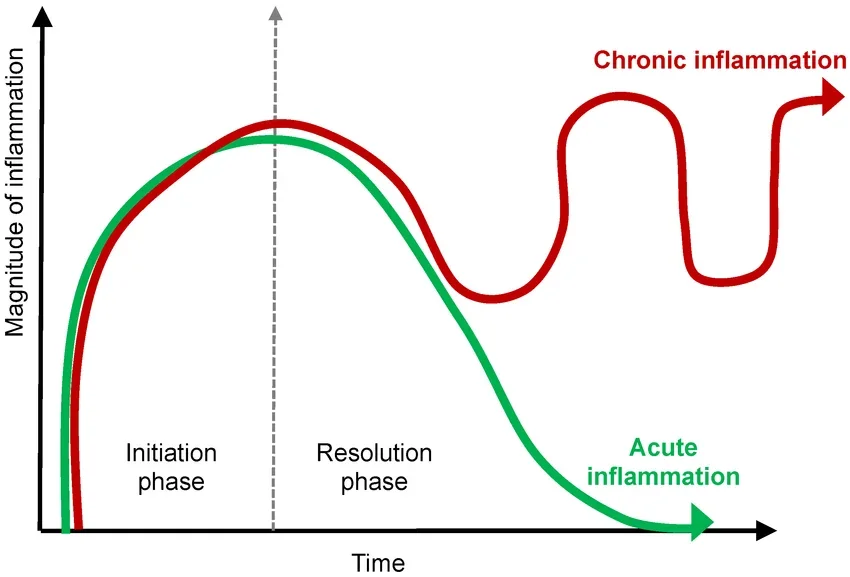
Source: Research Gate
Research in chronic inflammatory conditions increasingly shows that the issue is often not excessive activation alone, but an impaired resolution phase. Instead of fully switching off, inflammatory signaling can remain active at a low level, maintaining a state of ongoing tissue stress.
In the skin, this may present as:
recurring eczema or acne
prolonged healing times
increased sensitivity to otherwise minor triggers
This helps explain why many people feel they are “doing everything right,” yet not achieving lasting stability.
The Overlooked Role of Cellular Energy
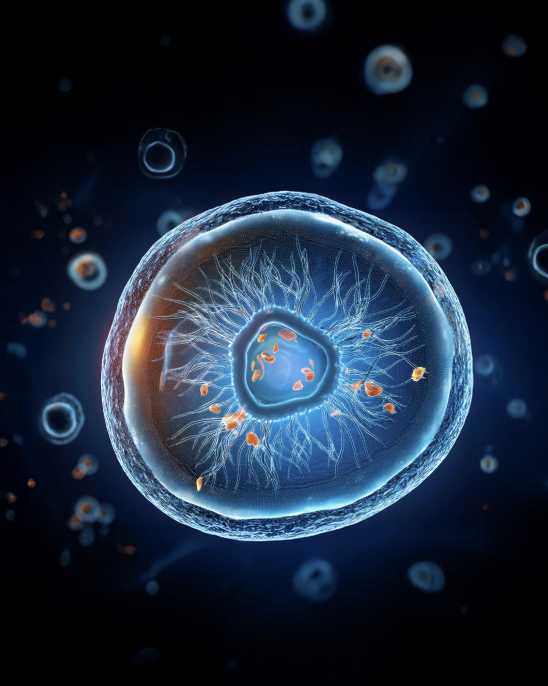
Resolving inflammation is not a passive process. It requires energy — specifically in the form of ATP (adenosine triphosphate), produced by the mitochondria.
ATP is essential for:
regulating immune responses
repairing damaged tissue
maintaining the integrity of the skin barrier
Under conditions of chronic stress — whether metabolic, environmental, or inflammatory — mitochondrial function can become less efficient. This is often linked to increased oxidative stress, a state in which reactive molecules accumulate faster than the body can neutralize them.
When this happens, the body retains the ability to initiate inflammation, but its capacity to resolve and repair becomes compromised.
A Shift Toward Cellular-Level Support
In recent years, there has been growing scientific and clinical interest in approaches that target cellular energy metabolism and redox balance (the equilibrium between oxidative and antioxidative processes).
Rather than focusing solely on reducing triggers or adding external support, such as nutritional strategies, supplementation, and gut-focused protocols these approaches aim to enhance the body’s internal capacity to recover.
Some emerging methods involve the use of small, bioactive gas molecules that can diffuse rapidly into tissues and interact directly with the cellular environment. Due to their size and neutrality, these molecules are able to reach areas that are less accessible to conventional antioxidants.
Preliminary research suggests that such approaches may:
support mitochondrial function
help regulate oxidative stress more selectively
improve the efficiency of cellular recovery processes
While this field is still evolving, it reflects a broader shift in how chronic inflammation is understood — not simply as an excess of harmful signals, but as a failure of resolution and regeneration.
What This Means for Skin Inflammation & Healing
When the body becomes more efficient at regulating inflammation and restoring cellular balance, the changes are often gradual but meaningful — reflected in more stable skin, fewer flare-ups, faster recovery, and reduced sensitivity over time.
Rather than replacing foundational approaches such as nutrition or gut health, this deeper level of support appears to enhance their effectiveness by improving the body’s underlying capacity to heal.
As interest grows in therapies that target cellular energy and recovery, new possibilities are emerging for individuals who have not responded to conventional or functional strategies.
Already being explored in clinical and performance settings for their role in inflammation regulation, recovery from physical and metabolic stress, and tissue repair, these approaches may represent a natural next step in the evolution of skin healing.
